
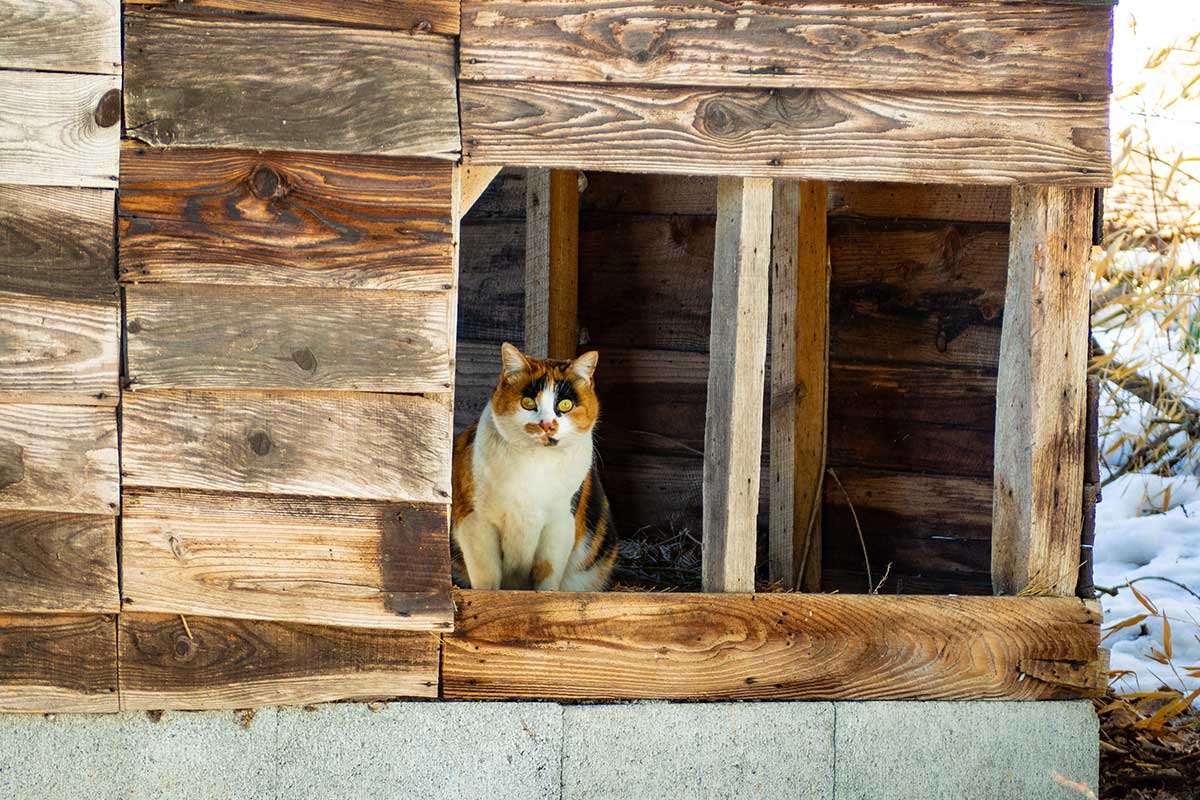
Do self-warming cat beds work outside?
A self-warming bed can help an outdoor cat in moderate cold if it stays dry and sheltered. In harsher cold, a heated pad or house may suit better; see K&H's outdoor heated cat beds. It depends on the weather and the shelter, so use the guide below to choose.

How It Works: Recycling a Cat’s Heat
Cats, like all mammals, are endotherms, but the more familiar (though possibly less accurate) term is warm-blooded. A cat’s body is a kind of living machine that works to convert the energy content of food into heat through metabolism. It works so well that it keeps felines at a cat-healthy body temperature of about 102°F.
But just as a hot cup of coffee eventually cools, a cat's body heat dissipates into the air around it. A cat's coat works as an insulator to help slow this process. On a chilly day, a cat in an unheated garage, on your covered porch, or in an outdoor cat house loses that heat faster. Self-warming beds for outdoor cats provide comfort while using no electricity at all. They work by taking advantage of a cat's natural heat production.
First, the bed has a layer of insulation that sits just beneath the cozy, plush surface, collecting the cat’s body heat. Then a secondary heat-reflecting layer bounces that warmth right back to the cat (the same concept as space blankets). It works best in a dry, sheltered spot, such as a cat house, shed, or garage, because fabric that gets wet loses its warmth.
Advantages of Self-Warming Cat Beds
Advantages of Self-Warming Cat Beds
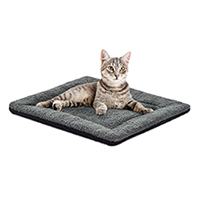
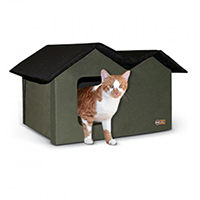
Self-warming cat beds can help keep cats warm in moderately cold weather without the need for electricity. Since there's no plug, you can use one in more places than a heated bed. Place a self-warming bed, like the K&H Self-Warming Pet Pad, inside the cat house; its microfleece cover is washable. The insulated walls of the unheated, extra-wide K&H Thermo Outdoor Kitty House help hold a cat's body heat, so it's a good home for the pad.
Because there is no active heat source, a self-warming bed runs no risk of overheating your cat.
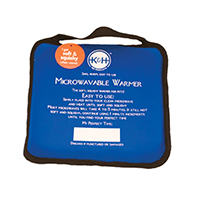
If your outdoor cat already has a bed he likes, try a bed warmer like the K&H Microwavable Pet Bed Warmer. This clever pad becomes soft after briefly heating it in the microwave and helps keep the interior of a cat bed cozy for hours; just be sure to place it in a bed or wrap in a blanket, in a spot protected from the weather.
What is the best outdoor cat bed?
There's no single best outdoor cat bed, because the right one depends on the cold, the shelter, and how many cats use it.
|
Situation |
Bed type |
What to check |
|
Moderate cold, dry shelter |
Keep it dry and off the ground |
|
|
Harsher cold in a shed, garage, or porch |
Follow the manual; cord dry and out of reach |
|
|
Several outdoor cats |
Extra-wide house, heated or unheated |
Small enough to warm with body heat |
|
A bed your cat already likes |
Product page instructions |
Sizes, prices, and stock are on each product page as of the publish date. For more, see Do Self-Warming Cat Beds Work? and Are Heated Cat Beds Safe?
How do you set up a bed for an outdoor cat?
- Raise the shelter off the ground.
- Keep it waterproof and windproof.
- Keep the space small enough for the cat to warm with body heat.
- Use straw, not hay, blankets, or towels, which soak up moisture and turn cold.
- Check the bedding for dampness.
A heated pad goes inside a covered shelter, used by its manual with the cord dry and out of reach.
FAQ about self-warming and outdoor cat beds
Do self-warming cat beds work outside?
They can, in moderate cold, as long as the bed stays dry and sits inside a shelter. A wet bed loses its warmth, and in harsher cold a heated option may serve your cat better.
What's the best outdoor cat bed for cold weather?
It depends on how cold it gets and where the cat sleeps. A self-warming bed suits a dry shelter in mild cold; a heated pad or house suits a shed or porch in deeper cold.
Sources
Alley Cat Allies, Providing Shelter and Cold Weather Tips for Cats; ASPCA Pro, Winter Shelters for Community Cats FAQs.