
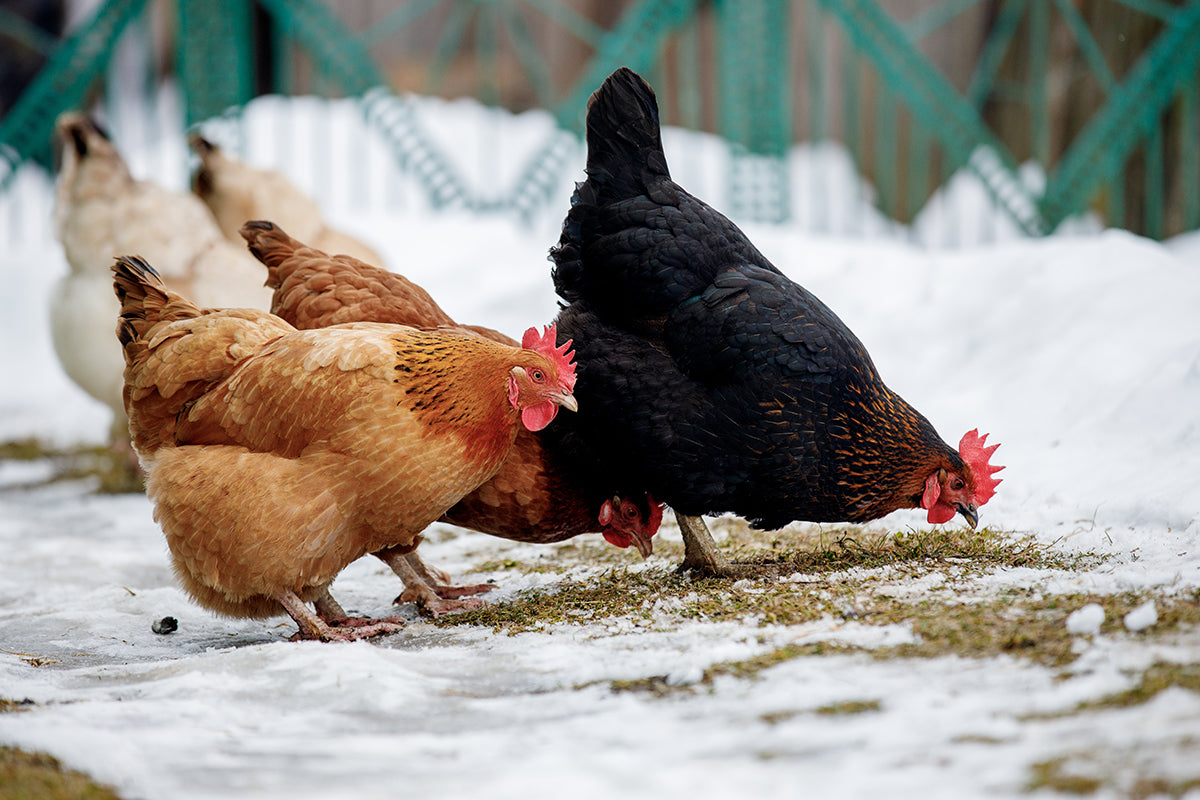
Best Cold-Hardy Chicken Breeds
Chanteclers, Brahmas, Dominiques, Wyandottes, and Plymouth Rocks rank among the best cold-hardy chicken breeds, since small cushion, pea, or rose combs and early feathering help them handle cold. Cold-hardy hens may keep laying in winter, but shorter days slow most flocks.

Which cold-hardy breed suits a small backyard flock?
|
Breed |
Comb |
Eggs per year |
Temperament |
Cold note |
|
Tiny cushion, almost no wattles |
Up to 220 |
Gentle |
Winter hardy; a winter layer |
|
|
Pea |
Up to 200 |
Calm, docile |
Good in cold climates; good winter layer |
|
|
Rose |
230 to 275 |
Calm and genial |
More frostbite resistant than many breeds |
|
|
Rose |
Not listed |
Calm |
Cold-hardy |
|
|
Single |
About 200 |
Calm, docile |
Cold-hardy from early feathering; comb can get frostbite |
Breed details are from The Livestock Conservancy. Most chickens tolerate cold when the coop is dry, ventilated, and draft-free, but a larger comb or wattle, or being a rooster, can still mean frostbite in a cold-hardy breed, according to Ohio State University Extension.
While these laying hens are cold-hardy, they still require proper accommodations to stay warm and be productive egg layers during winter. Here's what you can do to keep your chickens happy.
Which chickens keep laying eggs through winter?
Laying slows or stops in winter mostly because days are short, since hens need about 14 hours of light, according to Ohio State. Cold-hardy breeds the Livestock Conservancy calls winter layers or winter hardy, such as the Chantecler and Brahma, may keep laying at a slower rate. Giving 12 to 14 hours of light can help, as long as any lighting is installed safely. No breed lays all winter, so treat the egg figures above as yearly averages.
How do I prevent frostbite in chickens?
Frostbite shows up first on combs, wattles, and feet, as gray, black, or brittle skin. To prevent it:
-
Keep the coop dry and ventilated, since humid air raises the risk.
-
Give each bird 6 to 8 inches of roost, 1.5 to 3 inches wide, so hens can sit on their feet.
-
Clear snow from the run or lay down straw.
-
Give feather-footed breeds a dry place so wet feathers don't freeze.
If you spot frostbite, warm the area gradually, not quickly, and call your vet if you suspect infection.
Winterize Your Chicken Coop
All chickens require a safe, cozy home in the winter. During colder weather, you want to ensure your flock has a place to warm up, shelter from the elements and access to free-flowing water.
Most healthy chickens tolerate cold well, so extra heat is an option, not a requirement. When laying hens get too chilly, they huddle together and fluff up their feathers, though short days, more than cold, are what slow egg production.
To get the best results from your layers, collect the eggs soon after they are laid to avoid cracking and freezing. With a little mindful observation, you'll quickly learn what time of day your hens tend to produce.
Warm the Space
You can make their space cozier by sealing drafty windows and doors, adding proper rooftop ventilation and accessorizing the coop with extra bedding and warming devices. Use any heater with care, since Ohio State warns that heated devices can malfunction and start a fire. Follow the manual for every K&H heated product, including keeping bedding away from heated pads.
Hens can walk, stand, or sit on the K&H Thermo-Chicken Heated Pad, and its internal thermostat regulates the heat. K&H Thermo-Chicken Perches give hens a warm place to roost.

Another nice way to offer extra warmth to your pet hens is to install a few K&H Thermo-Chicken Perches. These heated roosts, made of tough plastic, are scratch and bite-resistant. The warmth on their feet lowers stress and keeps your pets cozy.
Prepare for Hatchlings
Hatching chicks this winter? The K&H Thermo-Poultry Brooder lets chicks gather under it, much like they would a mother hen. As they grow too tall for it, switch to the K&H Thermo-Peep Heated Pad, which warms chicks when they're on it.

As the chicks grow and become too tall to gather under the brooder, install the K&H Thermo-Peep Heated Pad. The chicks can walk, stand or sit on the flat pad to get warm. The internal thermostat heats to the chicks' body temperatures when on the pad, so they will never get too hot.
Offer Unfrozen Drinking Water
All pets need access to fresh, flowing water 24/7. The trick in colder climates is to keep drinking water from freezing!
The K&H Poultry Waterer heats 2.5 gallons of water, so your pets have continual access to unfrozen drinking water during cold weather. To winterize a waterer you already have, set it on the K&H Universal Waterer Deicer, which also works for goats, cats, and ducks.

If you already have a waterer but want to winterize it, try the K&H Universal Waterer Deicer. Simply place your waterer on top of the heated disk to keep winter water thawed. This deicer works not only for chicken watering stations but also beneath water troughs for other small farm friends, including goats, cats and ducks.
Winter Chicken-Keeping Is Possible
By selecting cold-hardy chicken breeds, you can keep your hobby going through the winter. Create a cozy hen house outfitted with warming pads, perches and fresh drinking water, and you're sure to have some happy cluckers this winter!
FAQ about cold-hardy chickens
What are the best cold-hardy chicken breeds?
Look for small combs and dense, early feathering. Chanteclers, Brahmas, Dominiques, Wyandottes, and Plymouth Rocks all fit. Even in these breeds, roosters and birds with bigger combs can still get frostbite.
Which chickens keep laying eggs through winter?
Cold-hardy layers such as the Chantecler and Brahma may keep producing, just more slowly. Daylight matters more than breed, though: with fewer than about 14 hours of light, most hens slow down or take a break.
Sources
Learn more about pet chicken care in "Do Chickens Like Rain or Getting Wet?" and "9 Types of Chicken Feed Explained."
Sources: Ohio State University Extension, Winter and Your Backyard Chickens; The Livestock Conservancy, heritage chicken breed pages.